
- Domains
- Domain search
- Your account
- Our services
- Partnership
- About


Are you planning to expand to Asia and looking for a short, easy-to-remember website address? Asian domains, especially the .asia domain, help emphasize the Asian identity of your business. Country-specific ccTLDs in Asia, such as Japan .jp, Singapore .sg, India .in, build customer trust in specific countries and increase the chances of successful sales.
If you're interested in Asian domains, you can easily find information about them on the map.
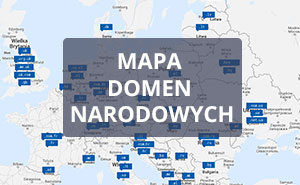
Asian domains are two ways to make your business recognizable in Asia.
The first is the new top-level domain .asia, and the second is a set of country extensions tailored to the markets where your business is expected to be recognized (e.g., .jp, .sg, .in).
Why the domain .asia? It's a clear, concise message to both your audience and search engines that your offer is aimed at the Asian community and markets. Registration is open to everyone, and addresses are allocated in the order in which applications arrive. As part of the registration fee, we provide the services of a local partner in a given region who meets the registry's formal requirements. Regulations require that the domain owner be represented by an entity located in one of the countries authorized to use the extension. We handle the entire brokerage process for you, and we offer very favorable registration and renewal prices.
It's also worth remembering IDN versions (national character names) for selected extensions. They help with address recall and increase local relevance. If you're building a website in Japanese, Thai, or Hindi, this is often a faster path to recognition than the English version.
If you're targeting the entire Asian region and want a single address, choose a .asia domain. Building a brand presence for a single country (e.g., just Japan)? Choose a local ccTLD. Operating globally, not just in Asia? Choose .com, and handle the country versions with subdirectories and hreflang.
Google treats ccTLDs as the strongest geotargeting signal. Subdomains and directories are weaker indicators of the local market and language. In practice, a country-code domain often achieves faster user adoption and a higher CTR in local results.
If your brand name uses local characters (e.g., Japanese, Chinese), consider registering an IDN variant with these characters. This makes the address easier to remember and can improve click-through rates in search results in that country.
Can I register a .asia domain without being based in Asia?
Yes, but you need an administrative contact in Asia, which is provided by Domeny.tv
What is the difference between .asia and .com in SEO?
.asia signals an Asian direction to users, .com is global and neutral. Regardless of your choice, use hreflang and separate URLs for the language versions of your website.
When do I need Asian country-code ccTLDs (e.g., .jp, .sg)?
When the priority is a single country's market, local regulations, and maximum trust. In some cases, you'll need a local agent.
Will my domain be blocked if I don't meet registry requirements?
It may be suspended or deleted if registry policies are violated.
Can I use IDNs (local characters) in Asia?
Yes, many Asian registries support IDNs; length limits apply to .sg.
How does a domain transfer work?
An authorization code (EPP/AuthInfo) and no lock are required. Transfer details may vary between registries.

This website uses cookies
We use cookies to personalize our content and advertisements, provide social media functions, and analyze the traffic on our website. We share information about your activity on our website with administrators of social media, online advertising, and analytics services. Partners may combine this data with other information collected from you or during your use of their services.
With your consent, we can better match our offer to your interests and preferences.
Necessary cookies are key for the proper operation of the website and enable basic functions, such as navigation and access to the safe areas of the website. Without them, our website will not function properly.
| Name | Description | Retention period | Cookie provider |
|---|---|---|---|
| PHPSESSID | User session ID | 24 hours | Domeny.tv MSERWIS |
| cookieSettings | Information about the user’s acceptance of cookies | 1 month | Domeny.tv MSERWIS |
Preference cookies allow our website to remember information and customize its appearance and functions, e.g. the user’s preferred language or region.
| Name | Description | Retention period | Cookie provider |
|---|---|---|---|
| doNotShowCartModal | Status | 24 hours | Domeny.tv |
Statistical cookies help us understand the behavior of users to better meet their needs by collecting and reporting anonymous data on the use of the website.
| Name | Description | Retention period | Cookie provider |
|---|---|---|---|
| _ga_*, _gid, _gat_* (Google GA4) | Analytics | 400 days |
Marketing cookies are used to track the activity of users on various other websites in order to display advertisements tailored to their interests, increasing the value of the advertisements, which then better match the interests of users.
| Name | Description | Retention period | Cookie provider |
|---|---|---|---|
| _gcl_au (Google Ads) | Advertising and remarketing purposes | 90 dni | |
| _fbc, _fbp (Facebook) | Advertising and remarketing purposes | 400 days | Meta (Facebook, Instagram) |
| lz_* | Komunikacja z klientami (chat) | 100 dni | Domeny.tv MSERWIS |
| polecony | Cele reklamowe, remarketing, program partnerski | 30 dni | Domeny.tv MSERWIS |
| DOMENYTV | Cele reklamowe, remarketing, mailing | 100 dni | Domeny.tv MSERWIS |
Unclassified cookies are in the process of being assigned appropriate categories, which is done together with their providers.
Cookies are small text files used by websites to facilitate their use by the users. The law permits the storage of cookies on the user’s device only when it is necessary for the operation of the website. For other types of cookies, we require your consent.
Our website uses various types of cookies. Some of them are set by third-party services available on our websites. You may revoke your consent at any time in the cookie section on our website.
More information about us, how to contact us, and how we process personal data is available in our Privacy Policy (www.domeny.tv/politykaprywatnosci). Please quote your consent ID and date when contacting us in this regard.
By clicking ‘Consent to all’, you declare that you consent to all cookies used on our Website by Domeny.tv MSERWIS Sp. z o.o., with registered office at ulica Stacyjna 1/63, 53-613 Wrocław and by third parties, i.e. Google LLC, Meta Platform Ireland Ltd., being installed on this device. Thanks to these cookies, we will be able to track your behavior on the pages of the Website and later analyze them in order to understand your way of using the Website, adjust the Website to your needs, as well as show you personalized advertisements (i.e. cookies are used for profiling). Cookies also enable us to remember your selected settings and Website interface customization. More information about the above cookies, their function, the entities installing them and purposes for their use are available in our Website Cookie Policy (www.domeny.tv/polityka-cookies).
If you click ‘Customize’, and then ‘Refuse’, we will only use the cookies necessary for the proper operation of the Website, as well as those cookies to the collection of which you voluntarily consented by selecting the relevant toggle. Note that you can always determine which specific cookies are to be installed on this end device. Giving consent (by clicking ‘Consent to all’) or adjusting settings in regard to cookie installation is voluntary. After consenting, you may always change the rules of retention or access to cookies in the browser settings on your device. Changing these settings will have no impact on the legality of processing the data collected via cookies installed before their change.
Cookies installed by Domeny.tv MSERWIS Sp. z o.o. or information collected through them may be considered personal data in certain circumstances. For such cases, the personal data controller is Domeny.tv MSERWIS Sp. z o.o. The controller may be contacted by regular mail or e-mail at info@mserwis.pl. You have the right to access your personal data, rectify, delete, transfer them, or restrict their processing, as well as a right to submit a complaint to the President of the Personal Data Protection Office. You have the right to object to the processing of your personal data. More information about the processing of personal data on the Website is available in the Website Privacy Policy.
Zaktualizuj swoją przeglądarkę, aby poprawnie wyświetlić tę stronę. / Update your browser to view this website correctly.